Cat Body Language Cheat Sheet: Tails, Ears & Meows
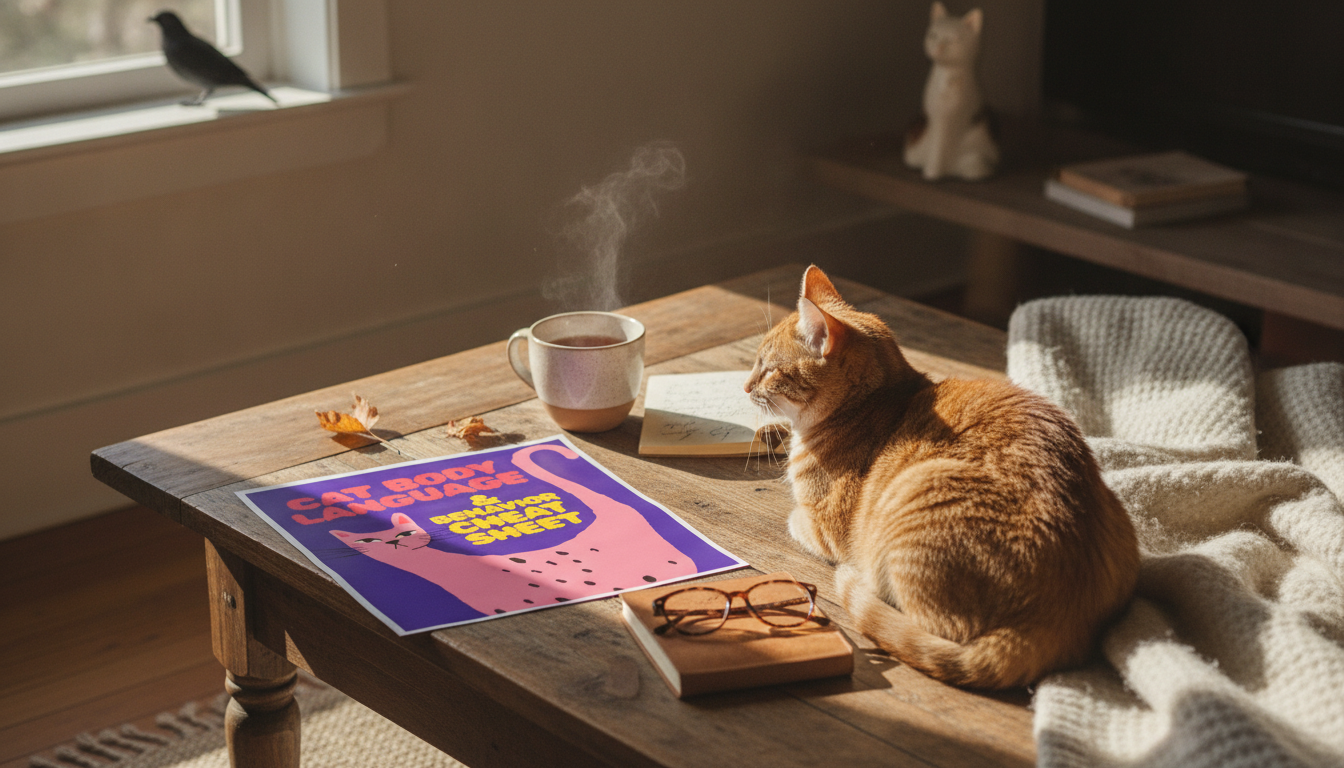
Cat Body Language & Behavior Cheat Sheet: A Printable Guide to Signals, Postures, and Meows
Cats communicate constantly through posture, tail and ear position, eyes, vocal sounds, and small changes in behavior. Reading these cues in context helps reduce stress, prevent bites or scratches, and build trust—especially during play, handling, introductions, and vet visits. This guide breaks common feline signals into clear patterns and includes a printable cheat sheet for quick reference.
How cats communicate: context comes first
Cat “signals” aren’t single, isolated meanings—think of them as clues that only make sense when you stack them together. A wide-eyed cat with a twitchy tail during a wand-toy game may be having a blast, while the same eyes and tail in a noisy room with a stranger can mean fear.
- Look at the whole picture: body posture + tail + ears + eyes + voice + the situation (food, strangers, play, pain, territory).
- Track changes over time: a normally social cat hiding, growling, or avoiding touch may signal stress or discomfort.
- Respect distance-increasing signals: stiff body, ears back, tail lashing. Heed them early to prevent escalation to swats or bites.
- Let choice lead: slow movements, a soft voice, and pauses allow a cat to opt in (or out) of contact.
For deeper behavior and welfare guidance, see resources from International Cat Care (iCatCare) and the ASPCA.
Tail signals: from friendly to overstimulated
A cat’s tail is one of the clearest “mood meters,” especially when paired with muscle tension and facial expression. Many bite incidents happen after a series of small tail cues were missed during petting or play.
- Tail upright with a relaxed tip: friendly, confident, greeting; often seen when approaching trusted people.
- Tail held low or tucked: uncertainty, fear, or discomfort; give space and reduce noise or handling.
- Tail puffed (bottlebrush): high arousal—fear or defensive excitement; avoid reaching in and let the cat decompress.
- Tail lashing or thumping: agitation or overstimulation; end petting/play and offer a calm reset.
Quick tail-read cheat sheet
| Tail cue | Likely meaning | Best response |
|---|---|---|
| Upright tail, relaxed | Comfort, greeting | Offer gentle interaction; let the cat initiate contact |
| Low tail, crouched body | Fear/uncertainty | Increase distance; provide hiding spots and calm routine |
| Puffed tail | Alarm or defensive arousal | Pause; remove stressor if possible; avoid cornering |
| Fast swishing/lashing | Irritated/overstimulated | Stop petting/play; redirect with distance and quiet |
Ears and eyes: the fastest emotional tells
If you want a quick “snapshot” of how a cat feels, start with ears and eyes. Ears often shift before the rest of the body commits to action.
- Ears forward or gently swiveling: curious, engaged; usually safe for interaction.
- Ears flattened sideways/back (“airplane ears”): discomfort or warning; stop handling and give space.
- Slow blinks: relaxed social signal; respond with a slow blink and keep your posture loose.
- Wide pupils: can mean play excitement, fear, or low light—confirm with body tension and tail behavior.
If a cat’s ears pin back while the body stiffens, treat it like a yellow light. Pause, look away slightly (less pressure), and let the cat decide what happens next.
Postures that signal comfort, stress, or defensiveness
Posture reveals both emotion and intention—whether a cat plans to approach, freeze, flee, or defend. The best handling decisions come from noticing tension patterns early.
- Relaxed loaf, side-lying, or belly partially exposed: comfort; not always an invitation to touch the belly.
- Crouch with weight low and muscles tight: uncertainty or readiness to flee; reduce demands and allow an exit route.
- Arched back with fur raised: defensive display; avoid looming and do not attempt to pick up.
- Freeze (stillness): can be a prelude to swatting/bolting; pause interaction and reassess.
When posture looks “small” (crouched, tucked, compressed), focus on safety and predictability: quiet voice, fewer hands reaching in, and access to hiding or elevated perches.
Meows, purrs, chirps, and growls: what the sounds often mean
Vocalizations add color to body language—especially with human-directed meows. The same sound can vary by cat, so patterns matter more than single events.
- Meows are commonly directed at humans: greeting, requesting food, attention, or access to a space.
- Purring: can signal contentment, but may also occur with pain, anxiety, or self-soothing—check posture and behavior.
- Chirps/trills: often appear during friendly greeting or excitement (watching birds, following a person).
- Hissing/growling/spitting: clear distance-increasing signals; stop interaction and give the cat control of space.
If vocalizing is new or paired with appetite, litter box, or mobility changes, consider a health check. The Cornell Feline Health Center has helpful behavior and health references.
Common scenarios: what to do in the moment
During petting
Watch for skin ripples, tail thumps, ear flicks, sudden head turns toward your hand, or a “suddenly still” cat. Those are early cues to pause before a nip. Shorten sessions, pet preferred zones (often cheeks, chin, shoulders), and stop while the cat still wants more.
During play
With visitors
When introducing cats
Printable cheat sheet: keep the signals handy
If you want a ready-to-print guide, see the Printable cat body language & behavior cheat sheet for quick, at-a-glance decoding of signals, postures, and common cat sounds.
More digital downloads you might like
- Solo Traveler’s Guide to Staying Safe | Digital Download PDF eBook
- Top 10 Must-See U.S. National Parks + Fast Facts | Digital Travel Guide eBook
FAQ
What is a cat’s body language when lying down?
Common relaxed positions include a loose loaf (paws tucked, soft face), side-lying with stretched limbs, or a belly-up sprawl—though belly exposure isn’t automatically an invitation to touch. Look for relaxed muscles, a still or gently curled tail, and neutral or forward ears; tense muscles, a tightly tucked tail, or pinned ears suggest the cat is resting but not comfortable with interaction.










Leave a comment