Confident Kids Bundle: Emotional Strength for Ages 3–5
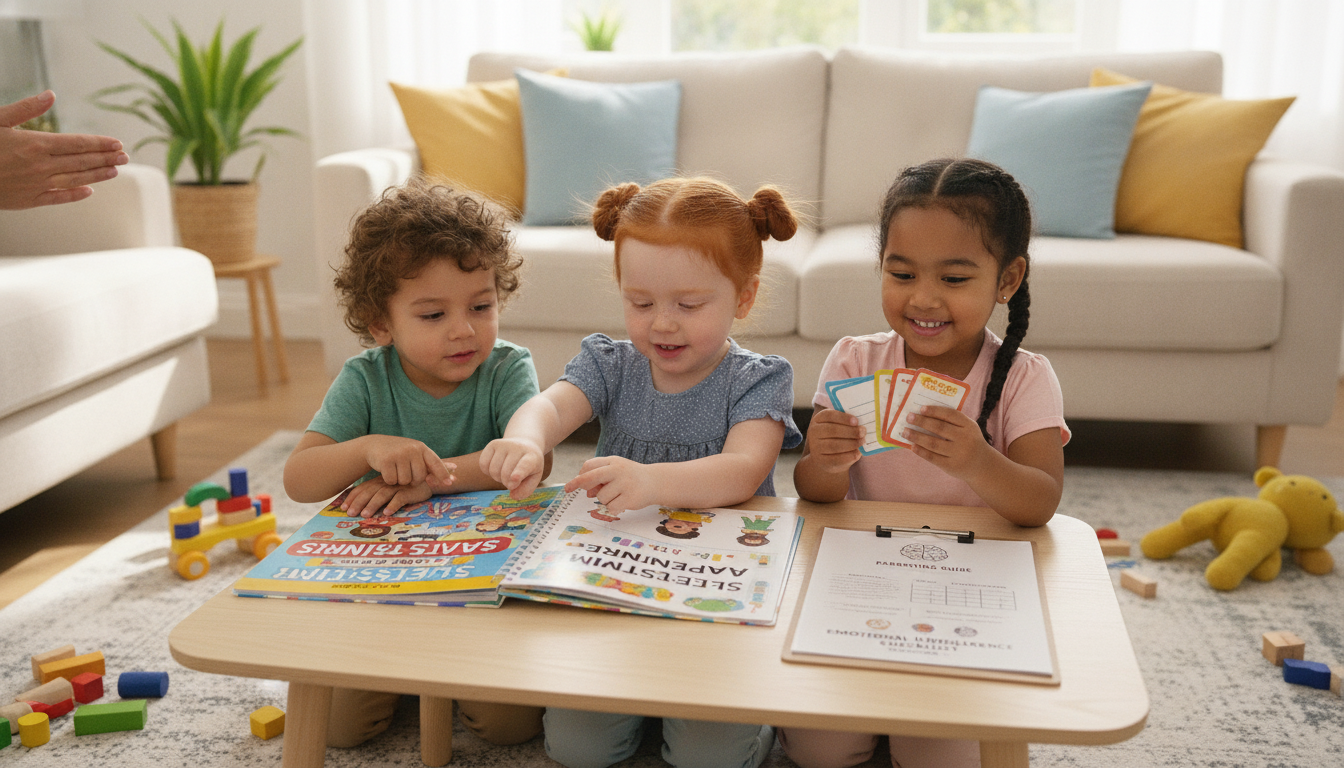
Confident Kids Bundle: Nurturing Emotional Strength for Ages 3–5
Big feelings, new routines, and social learning can overwhelm preschoolers—especially when they don’t yet have the words and skills to cope. The Confident Kids Bundle combines a parenting guide, self-esteem activities for ages 3–5, and an emotional intelligence checklist to support emotional strength through simple, repeatable routines that fit everyday family life.
What emotional strength looks like at ages 3–5
Emotional strength in preschool isn’t about having “no tantrums.” It’s about growing skills that help kids move through hard moments with support, then gradually with more independence.
- Naming feelings with basic vocabulary (mad, sad, scared, proud, excited) and gradually expanding nuance
- Recovering from small disappointments with support and practice rather than “snapping back” instantly
- Trying again after mistakes (building persistence without shame)
- Beginning empathy: noticing others’ emotions and responding with simple help or comfort
- Learning early self-control skills: waiting briefly, using a calm-down tool, following 1–2 step directions
For a helpful overview of typical social-emotional development milestones and supportive parenting approaches, see resources from American Academy of Pediatrics (HealthyChildren.org) and the CDC Essentials for Parenting.
What’s included in the 3-in-1 bundle
The value of a bundle is that it connects the “what do I do?” moments to a repeatable plan—without requiring long lessons or perfect timing.
- Parenting guide: practical strategies for building confidence, handling big emotions, and strengthening connection through daily interactions
- Self-esteem activities (ages 3–5): guided prompts and playful exercises designed to reinforce positive self-talk, effort, and a sense of capability
- Emotional intelligence checklist: a simple way to notice progress, identify skill gaps, and choose what to practice next
- Works well for home routines, preschool transitions, playdates, and bedtime wind-down
- Designed for short sessions that can be repeated; consistency matters more than length
If you want a structured, parent-friendly set you can return to week after week, start with Confident Kids Bundle: Nurturing Emotional Strength (3-in-1).
Who this bundle helps most
- Parents and caregivers supporting preschoolers who melt down during transitions (leaving the park, bedtime, getting dressed)
- Kids who get easily frustrated when tasks are hard (puzzles, sharing, learning new skills)
- Families wanting alternatives to punishment-based approaches, focusing instead on coaching and skill-building
- Children who need confidence-building after changes like a new sibling, starting preschool, or moving
- Caregivers looking for a structured way to track social-emotional growth without turning it into a high-pressure “test”
A simple weekly routine using the guide, activities, and checklist
Preschoolers learn best through repetition in calm moments—then gentle coaching in real situations. A steady weekly rhythm keeps the focus small and realistic.
- Pick one skill focus for the week (example: calming body, using feeling words, trying again)
- Do 1–2 short activities during calm moments (not only during meltdowns)
- Use one consistent script during tough moments: name the feeling, set the limit, offer a choice for coping
- Review the checklist at the end of the week to spot small improvements and decide the next focus
- Keep expectations age-appropriate: progress often shows up as shorter meltdowns, quicker recovery, or asking for help sooner
Quick weekly plan (ages 3–5)
| Day | 5–10 minute practice | In-the-moment coaching phrase | What to note on the checklist |
|---|---|---|---|
| Mon | Choose 1 emotion word + draw a face | “You look upset. It’s okay to feel upset.” | Can the child name the feeling with help? |
| Tue | Role-play a frustrating moment (toy won’t work) | “Let’s take a breath and try again.” | Does the child attempt a second try? |
| Wed | Praise effort with a specific statement | “You worked hard on that.” | Does the child respond well to effort-focused praise? |
| Thu | Practice a calm-down tool (breathing, squeeze, quiet corner) | “First calm your body, then we solve it.” | Can the child use a tool with prompting? |
| Fri | Share-and-wait game (short turns) | “Your turn is coming. Let’s wait together.” | Can the child wait briefly with support? |
| Weekend | Family reflection: “One brave thing you did” | “What made you proud today?” | Any confidence moments to celebrate? |
Self-esteem building that doesn’t rely on constant praise
Confidence grows fastest when kids experience competence—real “I can do it” moments—paired with steady connection. Instead of trying to talk kids into feeling good, build a home culture that makes effort safe.
Emotional intelligence skills to practice through play
Making the checklist work for real life
What to expect over the first month
Helpful add-on for family transitions
If big feelings spike around trips and schedule changes, having a simple, kid-friendly plan for what’s coming next can reduce friction. Some families pair emotional-skill practice with low-stress planning tools like Top 10 Must-See U.S. National Parks + Fast Facts for calmer “what are we doing next?” conversations and predictable routines on the go.
FAQ
Is this bundle appropriate for a child who has frequent tantrums?
Yes—tantrums are common at ages 3–5, and the bundle supports routines that reduce intensity over time by practicing skills during calm moments. Consistent emotional coaching plus a predictable coping plan can shorten meltdowns and speed recovery. If tantrums regularly affect sleep, safety, or school participation, consider talking with a pediatrician or child development professional.
How much time per day is needed to see benefits?
Plan on 5–10 minutes of practice most days, plus brief in-the-moment coaching when tough moments happen. Consistency matters more than duration, and a quick weekly checklist review helps you pick one focused skill to practice next.
Can the activities work for siblings of different ages?
Yes—core skills like naming feelings, using calm-down tools, and effort-focused feedback can be adapted for multiple ages. Keep prompts simple for younger kids, and add extra reflection or role-play for older siblings so everyone practices the same theme at the right level.












Leave a comment