Self-Watering Succulent Planter Tips for Indoor Care
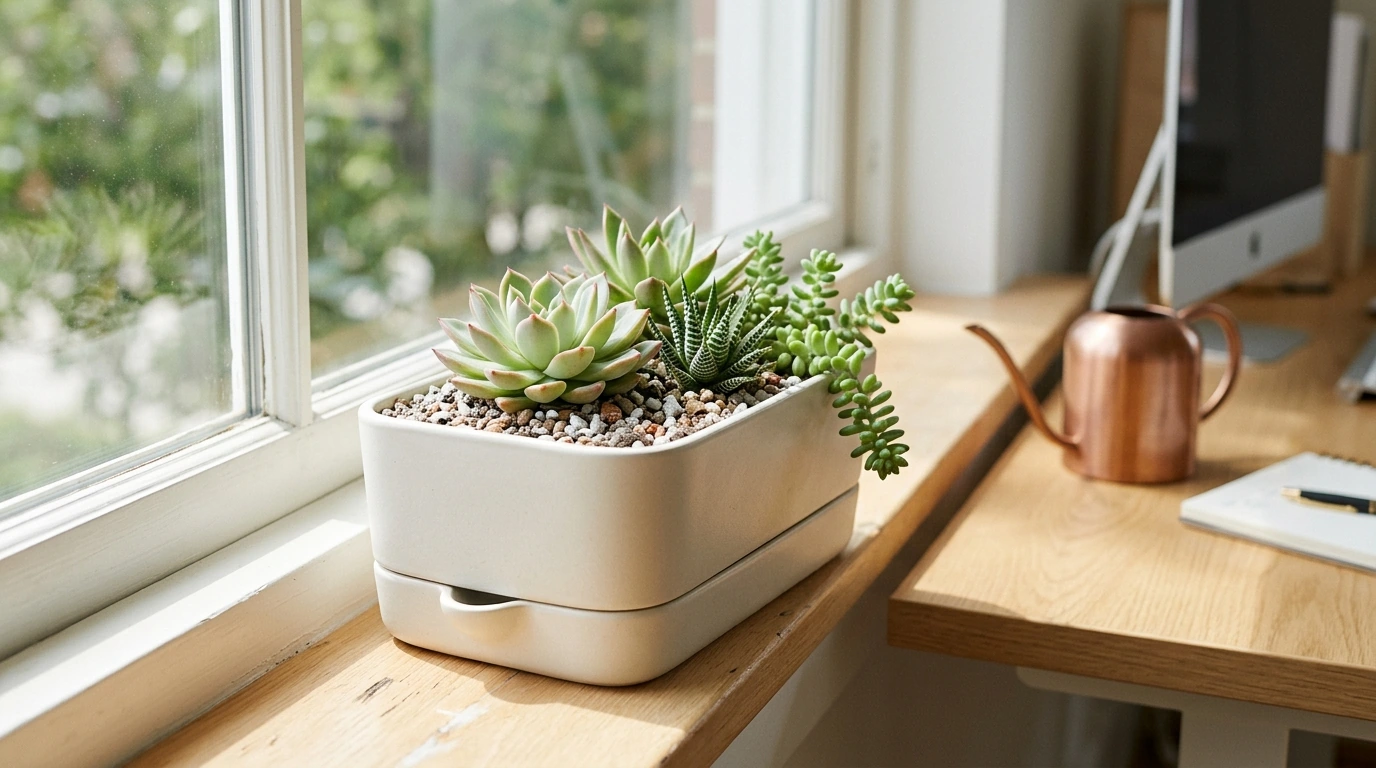
Self-Watering Indoor Succulent Planter: Easy Care for Busy Plant Spaces
Succulents thrive on a simple routine: bright light, fast-draining soil, and careful watering. A self-watering indoor planter can make that routine more consistent by keeping moisture available below the soil line—helping reduce both forgetful droughts and risky overwatering. The key is using the reservoir as a tool for steadier hydration, not as permission to keep roots constantly wet.
What a self-watering succulent planter does
A self-watering planter is designed to separate stored water from the soil surface while still allowing the plant to drink gradually. For indoor succulents—especially in rooms warmed by heat or dried by air conditioning—that consistency can make daily care feel simpler and less guesswork-driven.
- Uses a built-in reservoir to hold water separate from the soil surface.
- Delivers moisture gradually (often via wicking or a lower basin) so roots can take what they need.
- Helps stabilize moisture levels between waterings—especially useful in heated or air-conditioned rooms.
- Keeps the top layer drier, which can reduce fungus gnat interest compared to constantly damp topsoil.
If you’re setting up a compact plant nook, the Self-Watering Indoor Succulent Planter is a straightforward option for desks, shelves, and windowsills where you want a cleaner routine without hovering over a watering can.
When self-watering works well (and when it doesn’t)
Self-watering planters can be a great match for succulents, but success depends on light, soil texture, and how you manage the reservoir. Think of it as “deep watering with a buffer,” not “permanent wet soil.”
- Works well for indoor succulents that prefer deep, infrequent watering rather than frequent sips.
- Works well for people who travel, forget watering dates, or keep plants in rooms with fluctuating humidity.
- May not suit succulents in very low light, where evaporation is slow and roots stay wet too long.
- May not suit extremely rot-prone varieties if soil is too dense or the reservoir is kept constantly full.
- Best results come from pairing the planter with a gritty succulent mix and bright light.
Indoor guidance from the University of Minnesota Extension highlights how strongly light levels influence indoor succulent health—especially when watering systems make moisture more available.
Setting it up for healthy roots
Most self-watering “problems” are really setup problems: soil that stays too dense, a crown planted too deep, or a reservoir that’s treated like it must always be full. A few small choices at potting time can make the system work in your favor.
- Choose a fast-draining succulent/cactus soil; consider adding pumice, perlite, or coarse sand for extra airflow.
- Avoid burying the plant too deep; keep the crown above the soil line to prevent stem rot.
- After repotting, wait several days before filling the reservoir if roots were disturbed (helps broken roots callus).
- Start with a partial reservoir fill and observe: leaves should stay firm without becoming translucent or mushy.
- Place in the brightest appropriate window (often south or west, depending on plant tolerance) and rotate weekly for even growth.
If your home runs dry because of HVAC, improving overall room comfort can support plants and people alike—without turning succulent soil soggy. The Rain Cloud Humidifier can help moderate ambient dryness near plant shelves (keep it nearby, not blasting directly at the pot).
Watering routine: a simple cadence
With a reservoir, the goal is a repeatable rhythm: water becomes available, the plant drinks, the reservoir empties, and the root zone gets time to breathe before the next refill. Many succulents respond better to that cycle than to frequent small top-waterings.
Watering approaches for indoor succulents
| Approach | How it works | Pros | Watch-outs |
|---|---|---|---|
| Self-watering reservoir | Water stored below soil; moisture rises gradually | More consistent moisture; fewer missed waterings | Overfill risk in low light; needs gritty mix |
| Bottom watering (tray soak) | Pot sits in water briefly; soil wicks up | Good control; thorough hydration | Easy to forget to drain; salts can build up |
| Top watering | Water poured over soil until it drains | Flushes salts; simple | Overwatering risk; wet crowns can rot if careless |
For general care expectations—including how watering shifts with season and growth rate—the Royal Horticultural Society provides a practical overview that aligns well with a reservoir-based routine: water less when light is weaker, and avoid prolonged saturation.
Common issues and quick fixes
A simple option for desks, shelves, and windowsills
- The Self-Watering Indoor Succulent Planter is suited to compact indoor spots where a consistent routine is helpful.
- Pairs well with small succulents, propagation cuttings once rooted, or mixed mini arrangements (as long as care needs match).
- For plant corners that run dry due to HVAC, adding ambient moisture nearby can support overall comfort—without making the succulent soil overly wet.
FAQ
Can succulents live in a self-watering planter long term?
Yes, as long as the plant gets strong light and the soil is fast-draining. Let the reservoir dry between refills so roots get air time, and avoid keeping it constantly full.
How often should the reservoir be refilled?
Refill after it runs dry and the plant shows mild thirst, such as slight softness or light wrinkling. In bright light that may be sooner; in winter or low light it may be much less frequent.
What soil works best with a self-watering succulent planter?
A gritty cactus/succulent mix with extra mineral amendments (like pumice or perlite) helps keep roots airy and reduces the risk of rot. Avoid heavy, peat-rich blends that stay wet for too long.









Leave a comment