Minimalist Packing Planner: Light, Smart, Stress-Free Travel
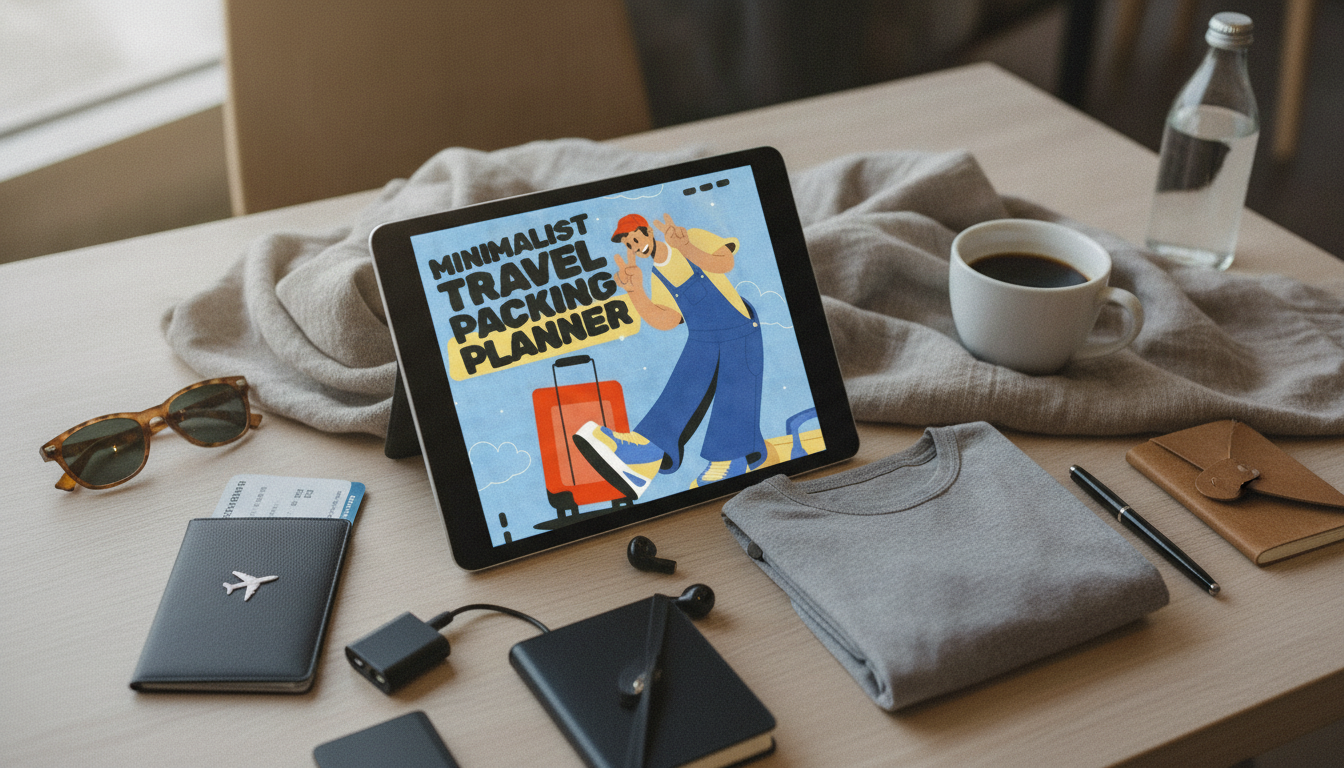
Minimalist Travel Packing Planner: A Digital Guide for Light, Smart, Stress-Free Trips
Packing light gets easier when decisions are made ahead of time. A minimalist approach focuses on versatile essentials, repeatable outfits, and a simple checklist that prevents last-minute overpacking. This guide lays out a practical system you can reuse for weekend getaways, business travel, and longer trips—without the stress of forgetting something important.
Why minimalist packing works (and why it feels calmer)
Minimalist packing isn’t about going without—it’s about choosing fewer, better items that earn their place in your bag.
- Fewer items reduce decision fatigue before and during the trip, so mornings feel easier.
- Light luggage improves mobility, saves time on transit days, and can lower baggage fees.
- A smaller kit is easier to keep organized in hotels, rentals, and shared spaces.
- Repeating outfits is normal—comfort, fit, and versatility matter more than variety.
Start with the trip constraints: climate, activities, laundry, and carry rules
Minimalism works best when it’s tailored to the actual trip. Before you touch a suitcase, set the parameters that determine what “enough” looks like.
- Check the weather pattern (not just the average): rain days, temperature swings, and wind.
- List planned activities by category: walking days, dinners, workouts, formal events, outdoor adventures.
- Decide the laundry plan: none, sink-wash, laundromat, or hotel laundry—this sets how many base layers to bring.
- Confirm baggage limits and liquids rules if flying; build the toiletry kit around compliance. The TSA 3-1-1 guidance is a helpful baseline for carry-ons: https://www.tsa.gov/travel/security-screening/liquids-rule.
- Set a single packing goal (example: one carry-on + personal item) to anchor all decisions.
If your destination has health considerations (seasonal outbreaks, vaccine recommendations, altitude notes), check destination-based guidance before finalizing meds and essentials: https://wwwnc.cdc.gov/travel.
Build a capsule wardrobe that repeats well
A capsule wardrobe is the fastest path to “more outfits with fewer pieces.” The trick is to make everything work together—on purpose.
- Choose a tight color palette (2 neutrals + 1 accent) so items mix easily.
- Prioritize layers over bulky pieces: base layer, mid-layer, light jacket, rain shell when needed.
- Pick shoes by function, not fashion: one primary walking shoe plus one compact alternate (optional).
- Use a simple outfit formula (example: 2 bottoms × 4 tops = 8 core outfits) and repeat with layering.
- Aim for fabrics that dry quickly and resist odor when possible; avoid “just in case” duplicates.
When something feels hard to cut, ask one question: can another item already in the bag cover the same job? If yes, the duplicate usually goes.
The minimalist packing checklist (core categories)
Instead of a huge list, use stable categories that stay the same across trips. Then adjust quantities based on laundry access and dress code.
- Clothing: tops, bottoms, underwear, socks, sleepwear, light outerwear, swimwear (only if needed).
- Footwear: primary pair; optional second pair only if it covers a different use case.
- Toiletries: travel-size liquids, solid alternatives (bar soap, shampoo bar), simple skincare, basic meds.
- Tech: phone, charger, earbuds; add laptop/tablet only if the trip requires it.
- Documents & money: ID/passport, cards, some cash, insurance details, reservations saved offline.
- Health & comfort: sunglasses, small first-aid, reusable water bottle, compact tote.
Size-by-days packing guide (a repeatable template)
Think in modules: a base set that covers 3–4 days, then small extensions—rather than packing a whole new wardrobe for each extra day.
- Use a base set for 3–4 days, then extend by adding only consumables and a small number of base layers.
- Plan to re-wear bottoms and outer layers; rotate tops and underwear.
- If laundry is available, cap clothing and wash mid-trip rather than doubling the bag.
- When in doubt, remove one item per category and validate whether a single versatile substitute covers the gap.
Minimalist packing template by trip length (adjust for climate and dress code)
| Trip length | Tops | Bottoms | Underwear & socks | Outerwear | Shoes | Notes |
|---|---|---|---|---|---|---|
| Weekend (2–3 days) | 2–3 | 1–2 | 3 | 1 light layer | 1 pair | Add one nicer top if needed; keep toiletries minimal |
| Short trip (4–6 days) | 3–4 | 2 | 5–6 | 1–2 layers | 1–2 pairs | If bringing a second shoe, make it pack flat and cover a distinct purpose |
| Week (7–9 days) | 4–5 | 2–3 | 7–9 | 2 layers + rain option | 1–2 pairs | Consider mid-trip laundry to avoid extra bulk |
| Extended (10–14 days) | 5–6 | 3 | 7–10 | 2 layers + weather-specific | 1–2 pairs | Laundry plan is essential; prioritize quick-dry items |
Toiletries and liquids: keep it simple and compliant
Toiletries are a common overpacking trap because they feel “small,” but they add up fast—especially with liquid restrictions.
A stress-free packing workflow you can reuse every trip
Using a digital packing planner to stay consistent
Recommended digital tools from the shop
- Minimalist Travel Packing Planner | Digital Packing Guide for Light, Smart & Stress-Free Trips — a structured, reusable system for capsule outfits, category checklists, and pre-trip timing.
- Solo Traveler’s Guide to Staying Safe | Guide | Digital Download PDF eBook | Solo Travel Safety Tips & Checklist | Travel Security Planning — helpful for tightening your “critical essentials” list and planning safer routines on the road.
- Top 10 Must-See U.S. National Parks + Fast Facts | Digital Travel Guide eBook for Nature Lovers, Hikers & Adventure Planners — a practical companion when your minimalist kit needs to support outdoor days without extra clutter.
FAQ
What is a good minimalist packing list?
A good minimalist packing list includes a small mix-and-match capsule wardrobe, one primary walking shoe, a streamlined toiletry kit that follows carry-on rules, essential tech (phone + charger), and critical documents. Scale quantities based on laundry access and planned activities rather than packing a unique outfit for every day.








Leave a comment