Toddler Nightmares: Calm Scripts & Bedtime Fixes
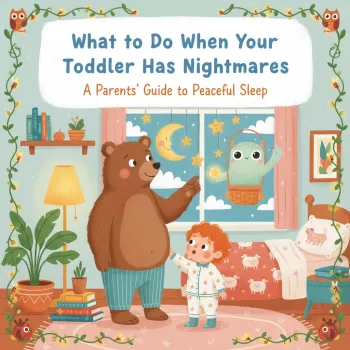
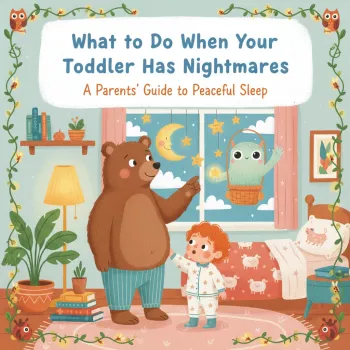
Nightmares can start in the toddler years and quickly turn bedtime into a stressful loop: sudden crying, fear of the dark, and repeated requests for reassurance. A calm, predictable response helps toddlers feel safe and learn that nighttime fears pass. Below are practical steps to soothe your child during a nightmare, adjust bedtime habits that may be fueling them, and know when sleep fears may need extra support.
Nightmares vs. night terrors: why the response matters
Not every middle-of-the-night scream is a nightmare. Knowing what you’re seeing helps you choose the right response—comfort and reconnection for nightmares, or quiet safety for night terrors.
- Nightmares usually happen in the second half of the night; a toddler wakes up frightened and may recall scary images.
- Night terrors typically happen earlier in the night; the child may scream, look awake, and be hard to console but won’t remember it in the morning.
- If your toddler is fully awake and seeking comfort, treat it like a nightmare: connect, reassure, and help them settle back to sleep.
- If it seems like a night terror, keep them safe, keep lights low, avoid trying to “wake them,” and wait for it to pass.
Quick differences to guide your next step
| What you notice | More like a nightmare | More like a night terror |
|---|---|---|
| Timing | Often later night/early morning | Often first 1–3 hours of sleep |
| Awareness | Fully awake, seeks you out | Seems awake but confused/unreachable |
| Memory next day | May describe scary dream | Usually no memory |
| Best response | Comfort + resettle | Safety + minimal interaction |
For additional background on how pediatric experts describe the difference, see the American Academy of Pediatrics resource at HealthyChildren.org.
What to do during a nightmare (a calm 5-minute script)
When a toddler wakes up scared, the goal is simple: help their body downshift without turning “being awake at 2 a.m.” into a new routine.
- Approach quietly and get on their level; use a soft voice and simple phrases: “You’re safe. I’m here.”
- Offer physical reassurance if welcomed (hand on back, cuddle, rocking) and slow your breathing so your child can match it.
- Use a grounding prompt for toddlers: “Can you feel your blanket? Can you hold your stuffed animal?”
- Keep the room dim; avoid turning on bright lights or screens, which can fully wake the brain and make it harder to return to sleep.
- Avoid long explanations or asking for detailed dream descriptions at 2 a.m.; focus on safety and regulation first.
- Once calm, guide them back to the same sleep setup (their bed if possible) to prevent new sleep associations that trigger more wake-ups.
If you want a ready-made set of comforting scripts you can follow when you’re exhausted, keep a short plan on your nightstand (even a sticky note): “Safe. Here. Breathe. Blanket. Back to bed.” Consistency is what makes it work.
If your toddler refuses to go back to sleep
Some toddlers calm down quickly but then panic the moment you try to leave. A gradual plan keeps you supportive without accidentally training repeated wake-ups.
- Use a “check-and-return” approach: sit nearby for 1–2 minutes, then return to your spot; reduce presence gradually over several nights.
- Offer a consistent comfort item: a favorite stuffed animal, a small blanket, or a “nighttime bravery” token kept by the bed.
- Consider a gentle nightlight if darkness is a trigger; choose warm, low light and keep it constant (no changing colors).
- Create a simple boundary phrase and repeat it without debate: “It’s sleep time. I’ll check on you in a minute.”
- If your toddler comes to your room, calmly escort them back with minimal talking; consistency matters more than intensity.
When you stay calm and boring (in the best way), you teach an important lesson: nighttime feels scary sometimes, and it still ends in sleep.
Common triggers that can increase nightmares
For a general overview of nightmares and coping ideas, the Sleep Foundation has a helpful parent-friendly summary.
A bedtime routine that reduces nighttime fear
Comforting language that helps (and what to avoid)
When to ask a pediatrician
A ready-to-use plan for tough weeks
- Use a simple tracking note for 7 nights: bedtime, wake time, nap, nightmare time, and what helped; patterns often appear quickly.
- Pick one change at a time (earlier bedtime, calmer media cutoff, shorter bedtime routine) and keep it steady for 5–7 nights.
- Prepare a “night kit” by the bed: water, tissues, favorite plush, and a brief comfort script so responses stay consistent when exhausted.
- If you want a structured, step-by-step approach with comforting scripts and bedtime solutions, consider: Ebook: What to Do When Your Toddler Has Nightmares.
More digital guides you may like
- Top 10 Must-See U.S. National Parks + Fast Facts | Digital Travel Guide eBook for Nature Lovers, Hikers & Adventure Planners
- Solo Traveler’s Guide to Staying Safe | Guide | Digital Download PDF eBook | Solo Travel Safety Tips & Checklist | Travel Security Planning
FAQ
How long do toddler nightmares usually last?
Nightmares often come in phases and many improve within a few weeks when bedtime and wake times are consistent. If they’re happening most nights for several weeks or your toddler shows strong daytime anxiety, it’s worth tracking patterns and checking in with your pediatrician.
Should a toddler sleep in the parents’ bed after a nightmare?
An occasional exception is okay, especially if it helps everyone reset, but repeated co-sleeping after nightmares can become a strong sleep association that leads to more wake-ups. When possible, comfort your child and resettle them in their own bed using gradual support (sit near, then farther away over time).
Can certain shows or books cause nightmares in toddlers?
Yes—stimulating or scary content can trigger vivid dreams, and even “kid” villains may feel intense for sensitive toddlers. A calming media cutoff before bed and gentle, familiar stories can reduce nighttime fears.











Leave a comment