Printable Couples Conflict Workbook: Listen, Repair, Rebuild

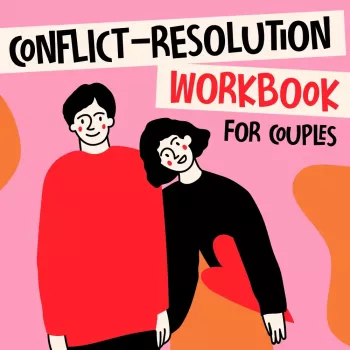
Conflict-Resolution Workbook for Couples: Printable Exercises to Improve Listening, Calm Arguments, and Rebuild Trust
Recurring arguments rarely start with the “real” issue—they escalate when partners feel unheard, misunderstood, or unsafe. A structured workbook can turn conflict into a repeatable process: slow down the moment, clarify what each person needs, and choose repair steps that protect the relationship. This printable communication eBook is designed for couples who want practical prompts, guided exercises, and simple tools to reset patterns and rebuild trust over time.
Who this workbook is for (and when it helps most)
- Couples stuck in the same argument loop: conflict about chores, money, intimacy, family, or time that keeps resurfacing
- Partners who shut down or escalate quickly and want a calmer structure for hard conversations
- Relationships recovering from hurt feelings, broken promises, or lingering resentment where repair needs to be consistent
- Busy couples who prefer printable pages and short, repeatable exercises rather than long reading sessions
- Times it may not be enough on its own: ongoing emotional/physical abuse, coercive control, or situations where safety is a concern (professional help is recommended)
For many couples, “better communication” becomes realistic when it’s concrete. A workbook creates boundaries around the conversation so you’re not trying to improvise empathy while flooded with stress.
What’s inside a strong conflict-resolution workbook
- Ground rules for productive conflict: staying on one topic, avoiding character attacks, and choosing a time-out plan
- Listening tools that reduce defensiveness: reflection, validation, and curiosity questions
- Prompts to separate facts from interpretations: what happened, what it meant, and what is needed next
- De-escalation steps: pacing, tone checks, breath pauses, and resetting the conversation when it goes off track
- Repair and trust-building: specific apologies, accountability, and follow-through agreements
- Printable layouts that make it easier to slow down: checklists, scripts, and space to write answers side-by-side
If you’ve ever left a conversation thinking, “We said a lot, but nothing changed,” structure is the missing piece. The goal isn’t to sound perfect—it’s to stay connected while solving one small part at a time. For more evidence-based communication concepts, the Gottman Institute’s overview of criticism, contempt, defensiveness, and stonewalling is a useful reference, and the American Psychological Association’s guidance on managing conflict highlights why calm timing and respectful language matter.
A simple way to use the printable pages (15–30 minutes)
- Step 1: Set the container—pick one topic, set a timer, and agree on the goal (understanding vs. winning)
- Step 2: Each partner writes a short “what I’m feeling / what I’m needing” statement before talking
- Step 3: Speaker–listener format—one speaks in short turns; the other reflects back before responding
- Step 4: Identify the “stuck point”—the moment the argument usually spirals (tone, assumptions, or old history)
- Step 5: Choose one repair action—apology, clarification, boundary, or a concrete plan with a deadline
- Step 6: Close with reassurance—one sentence each that confirms care, commitment, and next steps
- Optional: Schedule a 5-minute check-in 24–48 hours later to confirm follow-through and reduce lingering tension
Quick conflict reset script (print and keep nearby)
| Moment | Helpful line | Purpose |
|---|---|---|
| Starting | “Can we talk about one thing for 20 minutes and aim for understanding?” | Sets a shared goal and limits overwhelm |
| Reflecting | “What I’m hearing is… Did I get that right?” | Shows listening and reduces defensiveness |
| Validating | “That makes sense that you’d feel that way.” | Acknowledges emotion without agreeing to blame |
| Repairing | “My part is… I’m sorry for… Next time I will…” | Turns regret into accountability |
| Agreeing | “The plan is… We’ll revisit on…” | Creates clarity and follow-through |
Tools that improve listening during conflict
- Mirror, don’t debate: restate the message before offering a different perspective
- Name the emotion beneath the complaint: anger often covers fear, shame, disappointment, or loneliness
- Ask two curiosity questions before defending: “What matters most here?” and “What would help you feel supported?”
- Use “impact” language instead of “intent” arguments: focus on how it landed rather than proving motives
- Replace absolute words (“always/never”) with frequency words (“often/lately”): lowers the temperature without dodging accountability
- Keep requests specific and time-bound: what action, by when, and what “done” looks like
Listening improves fastest when it’s observable. If you can’t summarize your partner’s point in a way they agree is accurate, you’re still in two separate conversations.
How to resolve arguments without reopening old wounds
Rebuilding trust with small, measurable actions
Printable eBook details and how to get started
For couples who want a practical at-home framework, start here: Conflict-Resolution Workbook for Couples (Printable Relationship Communication eBook). It’s designed to print or fill digitally, then reuse the same process whenever a new conflict shows up.
If money fights are a frequent trigger, pairing communication tools with a practical plan can lower day-to-day tension. Consider adding a strategy resource like The Income Multiplier Bundle | 4-in-1 Bundle to support calmer, more collaborative conversations about budgets and goals.
FAQ
How long does it take to see results from a couples conflict-resolution workbook?
Some couples feel calmer after the first structured conversation, especially when they use timed turns and reflection. Lasting change typically comes from repeating the tools weekly for several weeks and consistently tracking follow-through agreements.
Can a printable communication workbook help if one partner shuts down during conflict?
Yes—writing first reduces pressure, and short, timed turns make the conversation feel safer and more predictable. A time-out plan with a clear return time helps prevent shutdown from turning into avoidance.
Is this a substitute for couples therapy?
No. It’s a practical support tool for communication and repair, but professional help is recommended for safety concerns, severe distress, or patterns that don’t improve even with consistent effort.










Leave a comment